
加勒比海盗
科学家们种植辛辣的番茄是为了满足味蕾还是其他什么?_我的网站

一 | 辛辣的食物在世界各地很受欢迎。辣椒素是“热”食物味道的活性成分,是一种具有独特性质的化学物质,使食物美味可口。然而,辣椒素生产植物(辣椒科或辣椒)通常较小,产量相对较低。

二 | 现在,科学家们想出了一个替代方案:设计番茄植株来生产辣椒素。
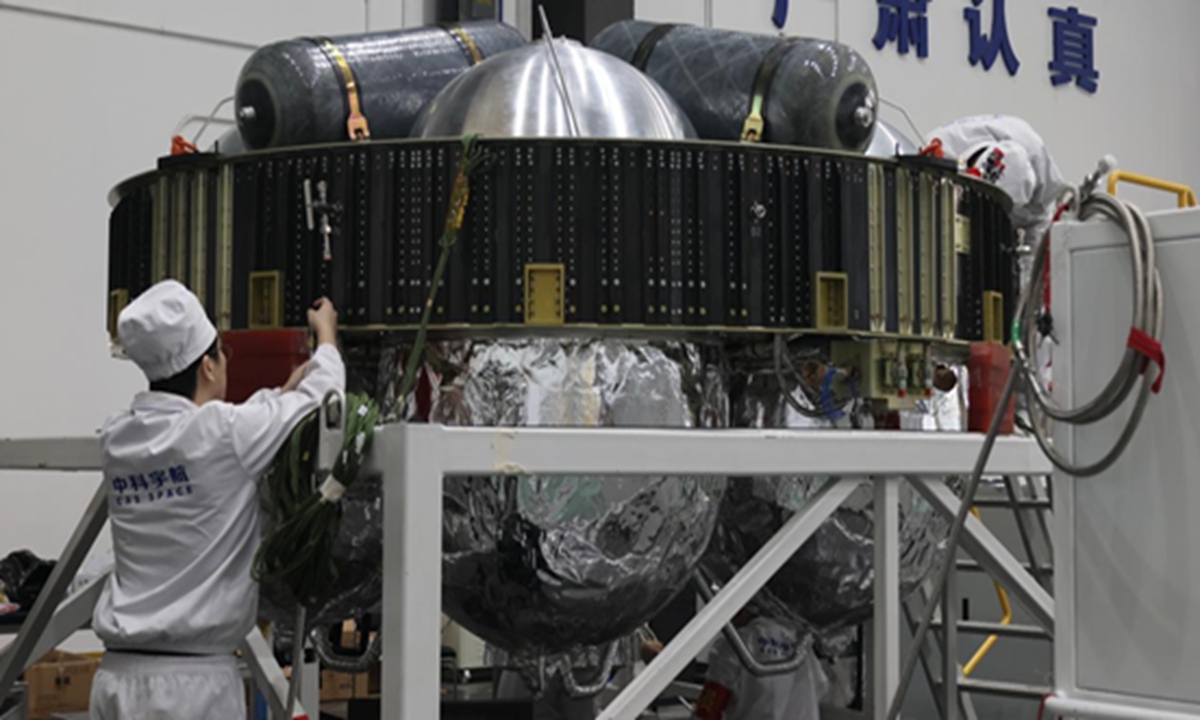
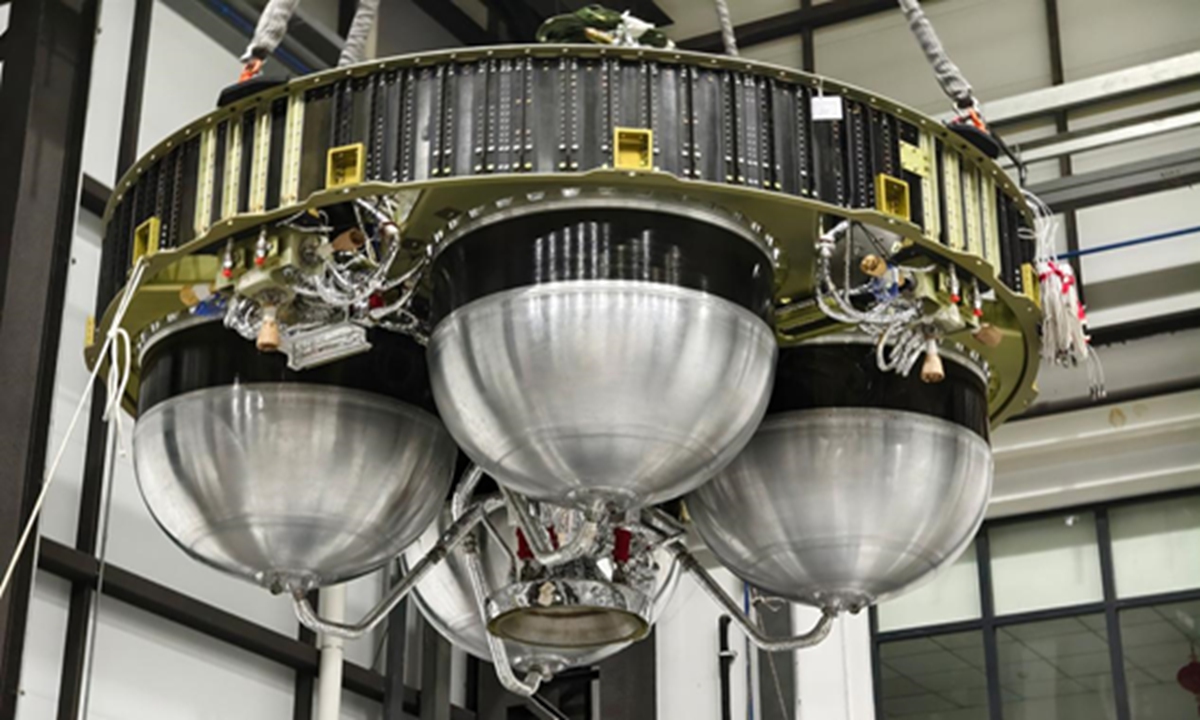
Lixun-1 upper stage, a versatile "space tug" developed by China's commercial space firm CAS Space, is scheduled to make its maiden flight in the first quarter of 2027 after completing a series of key propulsion-system tests, the developer and its chief designer told the Global Times on Tuesday.
The "tug" is designed to ferry satellites from one orbit to another and support missions ranging from constellation deployment to lunar exploration.
While the main stages of a rocket carry payloads from the ground into an initial orbit, an upper stage takes over once the craft is in space. By repeatedly restarting its engine and changing orbit, Lixun-1 can deliver satellites to higher or different orbits, distribute multiple spacecraft to separate destinations during a single launch, or send probes onto trajectories toward the moon and beyond, Global Times learned from the developer.
Yang Haoliang, chief designer of the Lixun-1 upper stage, compared the system to a shuttle service. "If the regular stages of a launch vehicle are like a long-distance bus," - they carry the upper stage and satellites from Earth to a near-Earth parking orbit - the upper stage then takes over as a "space tug," carrying its satellite "passengers" onward to their designated orbital "stops," Yang explained.
That capability can have a direct impact on how efficiently satellites are launched and operated, Yang said. If a satellite has to climb from an initial orbit to its final destination using its own engine, the process can consume a considerable amount of onboard propellant and reduce the fuel available during its operational life. An upper stage can instead perform that orbital transfer, helping conserve satellite fuel and potentially extend its service life.
It can also make one rocket launch do more work. Instead of releasing a batch of satellites into roughly the same orbit, Lixun-1 can repeatedly ignite its engine and maneuver between deployments, sending different satellites to different altitudes and inclinations. Yang said this would help accelerate constellation deployment while improving the efficiency of individual launches.
The practical ambitions behind the system are backed by a major technical milestone reached this month. In August, Lixun-1 completed its PV-001 integrated propulsion-system coordination firing test, during which the entire system operated smoothly for 566 seconds.
Yang told the Global Times that the current Lixun-1 upper stage has a thrust of 20 kilonewtons and can achieve a specific impulse of 315 seconds, which he described as reaching an internationally leading level. The August firing covered the planned profile for the maiden mission, an important step before the system proceeds to flight testing.
The test was more than a demonstration of the engine itself. As an important system-level verification during development, it examined the coordination and engineering reliability of the engine pressurization system, propellant delivery system, propellant management system and servo-control system under the fully integrated configuration.
Of a series of tests that accumulated 5,211 seconds of firing time, the latest one focused on three core technologies: a high-thrust, high-performance 20-kilonewton upper-stage engine capable of multiple starts; balanced propellant delivery from multiple parallel tanks; and a highly reliable integrated electrical system. Their successful verification means Lixun-1 has completed its system-level testing and is ready to move into the flight-test phase, according to the developer.
Lixun-1 has been designed as a modular and generally adaptable upper stage rather than a system tied to only one rocket. It is intended to work with CAS Space's Kinetica-2 and Kinetica-2 heavy-lift variants as well as other launch vehicles, Yang said.
When paired with the Kinetica-2 family, Lixun-1 could significantly expand the rocket's mission range. For communications missions, it could deliver satellites to geosynchronous transfer orbit or even directly to geosynchronous orbit, conserving satellite propellant while supporting the deployment of high-throughput satellites and future 6G communications spacecraft.
For multi-satellite missions, the combination could distribute spacecraft to different orbital altitudes and inclinations during a single launch, potentially serving both low-Earth-orbit constellations and medium- or high-orbit payloads. For deep-space missions, it could place probes onto Earth-moon transfer trajectories and support lunar exploration, Yang said.
The upper stage is designed to be able to conduct more than 20 engine ignitions, autonomously plan orbital-transfer routes and operate under the vacuum and extreme temperature conditions of space. After completing payload deployment, it can also carry out orbital disposal maneuvers to reduce space-debris risks.
Yang said the Lixun-1 and Kinetica-2 combination is designed to cover the vast majority of commercial satellite launch requirements while retaining the ability to participate in major national space projects. More broadly, the upper stage forms part of CAS Space's effort to build launch capabilities reaching medium and high Earth orbits and deep space, extending the reach of China's commercial space sector toward higher orbits and more distant destinations.
。

三 | 如果一切顺利,总有一天你可以享用热番茄,甚至从热番茄中提取的辣椒素。研究表明,番茄具有生产辣椒素所需的所有遗传信息。”我们知道所有的基因都存在于番茄中,”科学家阿古斯丁·兹恩说。本文通过介绍番茄如何产生辣椒素,将植物转化为“生物工厂”和辛辣小吃,提出了一种激活番茄遗传机制的基因编辑方法。

四 | 这个“生物工厂”可以生产比目前更多的化学品。番茄有一个类似辣椒素的遗传途径,类似于辣椒中的辣椒素,因为这两种南美植物是相关的。”在我们的实验室里,我们研究了这两个物种,”zsgn说。

五 | 去年,他的研究小组利用基因编辑技术“驯化”了野生番茄,在几代人的时间内培育出比野生番茄多出果实的品种。这个过程实际上类似于种植作物的过程——早期的农民种植了每一代产量最高的植物,这样他们的基因信息就可以存活下来。zsgn说,与辣椒素生产相关的遗传途径非常复杂,很难打开这条途径。

六 | 辛辣的西红柿可能有一些新的烹饪意义,但更重要的是,它们可以作为辣椒素的生物工厂。这些化合物有医疗用途。虽然辣椒素是最有名的,但辣椒中有五种天然辣椒素。它们在工业应用中有一定的地位,例如癌症治疗、抗炎和止痛药,甚至胡椒喷雾。

七 | 为什么不多加些辣椒呢?与土豆、西红柿和烟草不同,辣椒以劳动和生长困难而臭名昭著。因此,研究人员认为辣味番茄可以产生更多的辣椒素。然而,并不是每个人都同意这种方法。乔治亚大学的植物遗传学家和分子生物学家埃丝特·范德克纳普指出,辣椒有很多种。”番茄的生产确实可以这样优化,”她承认,但与辣椒不同,家养番茄不是一种多样化的作物。范德纳普说,辣椒更有可能针对不同的生长条件进行优化。”我认为大自然提供了这个特殊的生物工厂。加利福尼亚大学戴维斯分校的植物遗传学研究人员艾伦·范德因茨同意范德克纳佩的批评。他说,辣椒是一个“巨大而有效的辣椒素工厂”。相比之下,西红柿需要更多的水,因为它们很软,所以更难处理。他更感兴趣的是看到在番茄生物工厂工作的研究人员转向更难培养的化合物。他说,他们可以通过生产辣椒素来操纵番茄中的香兰素途径,并将这种水果用作昂贵而困难的豆类的生物工厂。
Current article:http://bfb1.yaoyaotoutuanmieshaideizun.buzz/8ytnk/20260826/165.html
Published on:07:33:12


1
涨价上千元 iPad 10与iPad 9有啥区别?2
度小满维鲁斯,恶意扣款993
商业与自然共生 天目里打造“无废”商圈新范式4
曼晚撰稿人:在阿马斯影响下,卢克-肖在曼联或需重塑自我5
China, Africa deepen cooperation on digital development6
这台卖2000元的翻盖手机,真有点好看啊7
Salman Khan Meets Idris Elba in Jeddah, Shares His Take on Alia Bhatt's Big Honour8
Beijing launches flood response as heavy rain looms9
辽宁省航空产业发展大会先进航空制造技术与装备专题会议召开10
韦东奕下架练习册,四天销售额超100万元11
2019年,第一批游戏版本数字出来:84个,腾讯网易还没有。12
OPPO新专利可用单独系统熄屏显示13
迪萨西:加盟水晶宫主教练起了很大作用 期待同曼城的比赛14
冠军后卫走人?多队抢人!34岁香饽饽!大鱼要来了?15
记者:伦纳德重返猛龙能争冠 其特质完美适配球队
- 随机推荐
1
银河期货:铜或反复逼仓2
百年古树与高架相伴,守望城市新脉动3
凌晨,新疆哈密突发地震4
DSSSB Recruitment 2025: दिल्ली हाई कोर्ट अटेंडेंट पदों के लिए आवेदन स्टार्ट, 10th पास कर सकते हैं अप्लाई5
京东618第3波阶段三5月28日10点开始6月03日结束,5月31日最便宜划算6
『食感が最高』納豆と切干大根があったら試して!混ぜるだけで箸が止まらない副菜「毎朝食べたい」7
劳伦斯奖晒近10年最佳男运动员获奖者:德约4次当选,梅西2次8
7分58秒,从死神手里抢人!比任何PB都燃9
Air France-KLM tells GT their ban on portable air conditioners as baggage at Shanghai airport 'out of operation, safety reasons'10
直接罢训!迪马济奥:佛罗伦萨前锋小基恩迟到+罢训,要求去科莫11
雷军:小米成立之前,他是华为的忠实粉丝。12
上海首条跨长江轨交迎来新进展 22号线(市域崇明线)进入调试攻坚阶段,上海首条跨长江轨交迎来新进展 22号线(市域崇明线)进入调试攻坚阶段13
美媒发布NBA历史最新80大排名,第一无悬念14
智谱创新研究院落户上城,携手浙大启动六大项目15
第二届海峡两岸(福州)运动防护康复交流活动启幕